
High cost of acquisition due to a variety of reasons, including higher GST than all other major countries, is slowing down car demand in the country and unless the Centre and states take steps to reduce it, the industry is unlikely to experience reasonable growth, according to Maruti Suzuki India Chairman R C Bhargava. Addressing shareholders in the company's Annual Report for 2020-21, he said after the devastating second wave of the coronavirus pandemic hitting the first quarter of FY22, the performance in the next three quarters will largely depend on how effectively people get vaccinated and observe safety protocols.

The company, which sells every second car in the domestic market, said it expected production and sales to grow between 4 per cent and 8 per cent for the financial year started in April.

When the first Maruti 800 was introduced in 1983, it was made of almost entirely imported components; in a few years it had been heavily indigenised - although, for years, the older "original" models commanded a premium on the thriving second-hand market.
Maruti Suzuki India on Tuesday became the first Indian automobile company to produce one million cars in a year.

The country's largest carmaker Maruti Suzuki India is understood to be planning to ramp up its output by about 10 per cent to produce over 1,10,000 units every month from October.
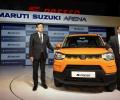
The country's largest carmaker Maruti Suzuki India will not "walk away" and fight to get back to 50 per cent market share in the domestic passenger vehicle segment, according to company Chairman R C Bhargava. The auto major, which is commemorating 40 years of operations, has seen its market share drop to 43.38 per cent in FY22 from a peak of 51.21 per cent in FY19. In order to get back its dominant leadership, the company plans to drive in models catering to both urban and smaller cities and rural areas.
Suzuki Motor Corporation has already said India would be the global small car development hub outside Japan for other markets, he added. MSI's R&D centre is being developed to be at par with SMC's facility in Japan. It will also have crash test centre.

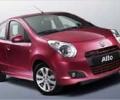
Alto, the Maruti brand synonymous with small cars, introduced the new generation K10 on Thursday, aiming to consolidate its position further amid shrinking demand for hatchbacks. With prices starting at Rs 399,000 and going up to Rs 533,500 (for manual transmission), the new model claims fuel efficiency of 24.90 km per litre. The Japanese car maker, which has been selling 100 Altos every hour for the last 22 years, had discontinued the model in February 2020.
Currency fluctuation has been affecting margins.
Finance Minister Pranab Mukherjee on Friday announced raising of excise duty to 12 per cent from 10 per cent at present.
While the company used to report bookings of 4,000-5,000 every day, following the partial lifting of lockdown, in a week, it has received around 6,000.

Among the Sensex firms, Mahindra & Mahindra jumped the most by 5.96 per cent. Bajaj Finance, Bajaj Finserv, Trent, ITC and HDFC Bank were also among the gainers. However, Maruti Suzuki India, Bharat Electronics, HCL Tech, NTPC, Power Grid, Infosys and Reliance Industries were among the laggards.

The company's overseas sales growth was driven mainly by the export of its flagship model A-Star, which clocked sales of over one lakh units till December 2010, within 11 months of launch.

Tesla needs to either sell the same models with reduced features to lower the cost for Indian market, or incur losses.

After a record-breaking year, India's automobile industry is entering 2026 on a relatively strong footing, with sales growth expected in the 6-8 per cent range. The outlook is underpinned by policy support, including GST rationalisation, easing monetary conditions, and income tax relief, which together are likely to improve affordability and sustain consumer demand across vehicle segments.
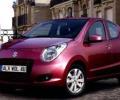
"Out of the total exports, A-Star alone will comprise one lakh units while the rest would be other models," Maruti Suzuki India executive officer (marketing) Mayank Pareek told reporters in New Delhi. The company currently has an inventory level of three weeks and is producing more to meet the upcoming festive demands. On the company's diesel-engine plans, Pareek said it will expand the production capacity to 300,000 units per annum by 2010-11 from the existing 2,40,000 units

According to the company, the talks that began on Wednesday morning at 11 am continued through the night and were still going on Thursday morning.
In addition to the showroom discounts that ranged from Rs 12,000 on Maruti 800, Rs 11,000 on Alto and Rs 18,000 on Wagon R and Estillo, it offered an additional discount of about Rs 4,000 to such employees. This year, it has stopped financing the scheme. Instead, it has tied up with Axis Bank that offers financing at 10.75 per cent with repayment periods of three to five years (market rates are currently at 14 -15 per cent).

The average discounts on the models, especially petrol, were all-time high during the July-September quarter.

Company had posted a net profit of Rs. 656.55 crore in the corresponding quarter of 2009-10 fiscal.

India's largest carmaker Maruti Suzuki plans to ride on the back of new launches in the future to retain its numero uno position in the market place and beat back competition from its peers.
With induction of these people, the company's workforce will expand by about 27 per cent to nearly 11,000 employees.
India's largest car-maker Maruti Suzuki India Ltd on Monday announced a fresh investment of US $1.8 billion to achieve its target of producing one million cars by 2010-11. The bulk of Maruti's fresh investment will be in a research and development facility, for which the company has applied to the Haryana government for 500 acres of land near Manesar.
The country's largest car-maker Maruti Suzuki India on Tuesday launched a diesel variant of its SX4 sedan at an introductory price of Rs 7.74-8.62 lakh (ex-showroom, Delhi).

In a statement issued on Friday, India's largest car manufacturer said that 'due to sharp increase in the input costs and also introduction of BS-IV norms in some models, Maruti Suzuki India Ltd has decided to pass on part of this cost impact to customers.'

The country's largest carmaker Maruti Suzuki India on Tuesday said its models Swift, Baleno, WagonR, Alto and Dzire have emerged as best selling cars in 2020-21 and the top five models have come from its stable for the fourth consecutive year. Swift with over 1.72 lakh units was at the number one position followed by Baleno with 1.63 lakh units, the company said in a statement. Maruti Suzuki India's (MSI) tall boy WagonR was in the third spot with 1.60 lakh units while Alto and Dzire were at fourth and fifth with 1.59 lakh units and 1.28 lakh units respectively, it added.

Sedans and hatchbacks have both lost market share to SUVs, which now account for more than 50% share of the 4 million-odd-unit PV market in the country.
The company has tied up with scrap dealers across India to dispose of old cars exchanged for new cars and is welcoming customers to come with old cars of any make for exchange. The company has started giving offers to customers worth up to Rs 40,000 while purchasing a new car through exchange, while inviting bids from scrap dealers at the same time for the old cars.

Gujarat Chief Minister Narendra Modi wooed Indian auto giant Maruti Suzuki to set up a car project in Gujarat and said that the state government would provide all the facilities to it.
Japanese manufacturer Suzuki displayed two cars at the Frankfurt Motor Show that have a huge potential for launch in India.
For the entire 2012-13 financial year, however, the company's total sales increased by 3.33 per cent to 11,71,434 units from 11,33,695 units in 2011-12, Maruti Suzuki India said in a statement.
Maruti Suzuki India has hiked prices of its vehicles across all models, except the entry level sedan DZire, by up to 3.4 per cent.

Jimny will be priced between Rs 12.7 lakh and Rs 15.05 lakh.

The company had posted a net profit of Rs 465.36 crore (Rs 4.65 billion) for the same quarter last fiscal, Maruti Suzuki India said.
Maruti Suzuki, India's largest car company by sales, is working on an ambitious plan to launch electric cars and compressed natural gas variants for three or four models in the domestic market.

The initial public offer of Hyundai Motor India Ltd, the Indian arm of South Korean automaker Hyundai, received an 18 per cent subscription on the first day of bidding on Tuesday. The Rs 27,870 crore initial share sale received bids for 1,77,89,457 shares against 9,97,69,810 shares on offer, as per NSE data. The IPO received over 9 lakh applications on the first day.
Maruti Suzuki India Limited (MSIL), which witnessed labour unrest at its Manesar facility, is set to complete the process of regularisation of contract workers at the unit by November-end.
The car will come with a petrol and a diesel engine option.

India's used car market, which has been growing steadily at 10-12 per cent over the last 2-3 years, is expected to reach $40 billion in FY26.
The proxy advisory firm's latest comments come within days of Maruti saying that it expects to save about Rs 10,500 crore (Rs 105 billion) in the first 15 years by not investing in the Gujarat facility.
